Director, Human-AI Teaming Lab · U.S. Space Force Space Systems Command
Building the operational doctrine for artificial intelligence at the edge of American strategic competition. The nation that decides faster wins.
MD S. "Doc" Rana
Director, Human-AI Teaming Lab
U.S. Space Force · Space Systems Command
Austin, Texas
MD S. "Doc" Rana is the Director of the Human-AI Teaming Lab at U.S. Space Force Space Systems Command in Austin, Texas. He founded and directs the Applied Cyber, Data and AI Accelerator at Space Systems Command — the first program of its kind inside the command — and serves concurrently as Acting Chief Data and AI Officer. His work focuses on the operational integration of artificial intelligence with the Space Force mission, the doctrine of human-machine teaming in contested space domains, and the cybersecurity foundations that make either possible.
His federal civilian career spans nearly a decade across the U.S. Army, U.S. Navy, and U.S. Space Force. He joined Army Futures Command in 2018 as a computer engineer and cybersecurity engineer during the command's initial stand-up in Austin, then served as Artificial Intelligence Task Force Integrator and Special Cyber Advisor. Earlier federal service includes Head of IT and Cyber for the Infrastructure Division at NAVSEA in Philadelphia and Computer Scientist for unmanned systems R&D at SPAWAR in San Diego, where he led cybersecurity engineering for the SHARKCAGE program and the Navy Cyber Situational Awareness initiative.
Rana holds a reserve commission as a Captain in the U.S. Air Force, currently assigned to U.S. Indo-Pacific Command headquarters in Honolulu as Action Officer for AI Integration and Cyber Operations. His Reserve career spans offensive cyber operations at USCYBERCOM, defensive cyber at the 149 Fighter Wing, and active-duty tours at AFRL, U.S. Transportation Command, U.S. European Command at Ramstein Air Base, and DAF PEO C3BM at Hanscom supporting the Advanced Battle Management System program.
He began his career as a Merchant Marine Officer for NYK Line in Nagoya, Japan, after graduating First Class from Marine Academy Bangladesh — one of 59 cadets selected from over 15,000 applicants. He holds graduate degrees in Computer Science and Business Administration, both with 4.00 GPAs, and is completing an MS in Artificial Intelligence at UT Austin. He begins a Mid-Career MPA at Harvard Kennedy School in July 2026 as an American Service Fellow and Center for Public Leadership Fellow — and co-founded Palladium Ventures (pldm.vc), a defense-focused early-stage fund investing in the next generation of national security technology.
Panelist at a Rice-led convening where academic, industry and government partners charted the future of physical AI in space — spanning autonomy, sensing, and resilient space systems. Co-hosted with NASA Johnson Space Center, Purdue, and Vanderbilt.
Rice NewsPanelist at the Bangla House × SXSW London showcase — "The Machines Are Learning" — on AI, human-machine teaming, and the next decade of strategic technology competition. Session drew standing-room attendance at Bi Nazrul Centre.
SXSW LondonSpeaker at the inaugural UTSA-led statewide workshop advancing Texas collaboration on space cybersecurity across 13 universities, federal partners including Sandia National Lab, and industry. Panelist on "Emerging Cyber Threats and Future Needs."
UTSA NewsFeatured speaker and panelist on long-horizon warfare and the technology stack — AI, autonomy, and cyber — that will define U.S. and allied military advantage through 2040. The nation that connects its sensors, fuses its data, and decides faster has the advantage.
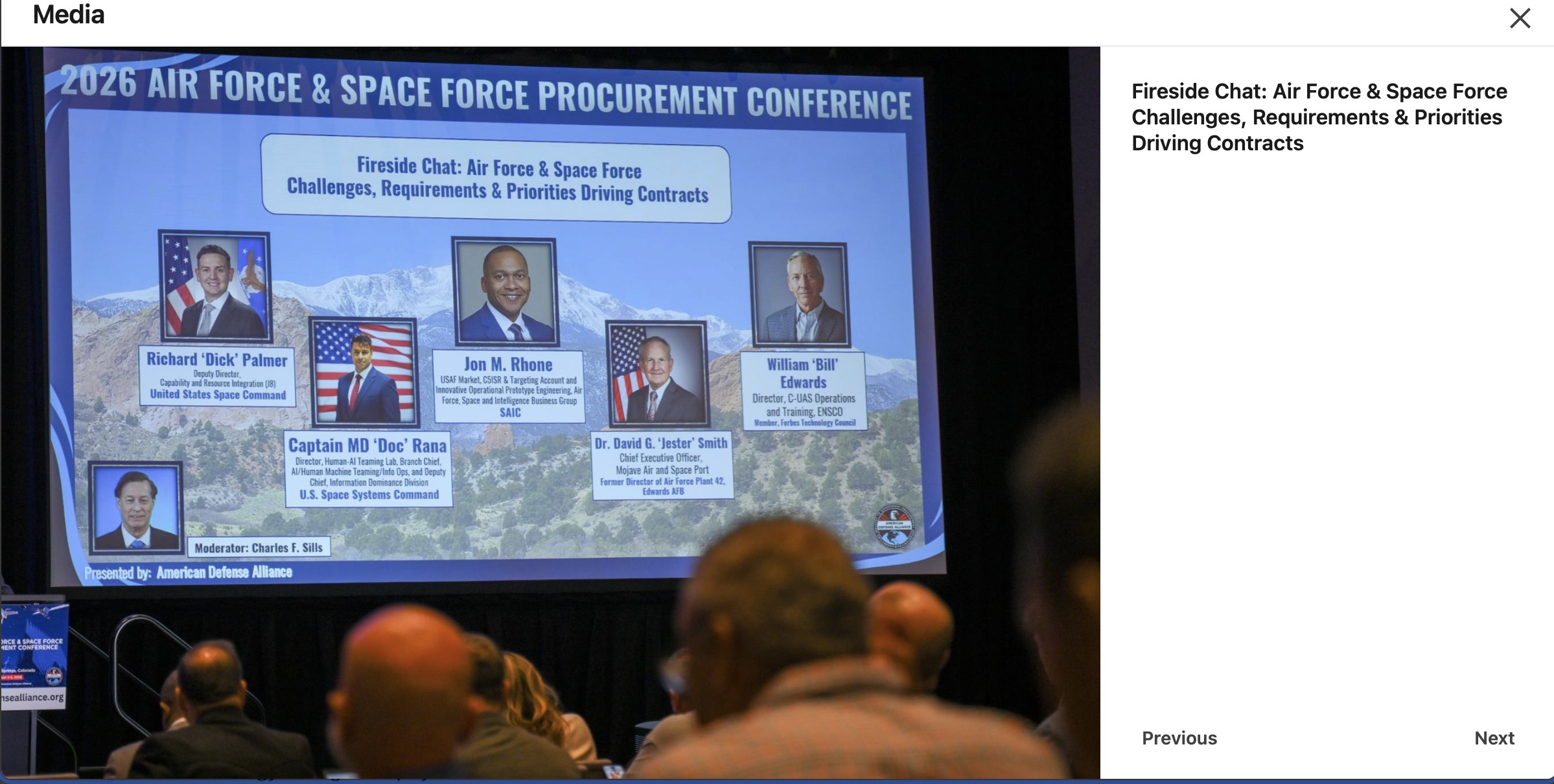
Watch on YouTubeFeatured speaker on how Space Force mission challenges shape the contracting and acquisition pathway for AI and cyber capabilities — from experiment to program of record.
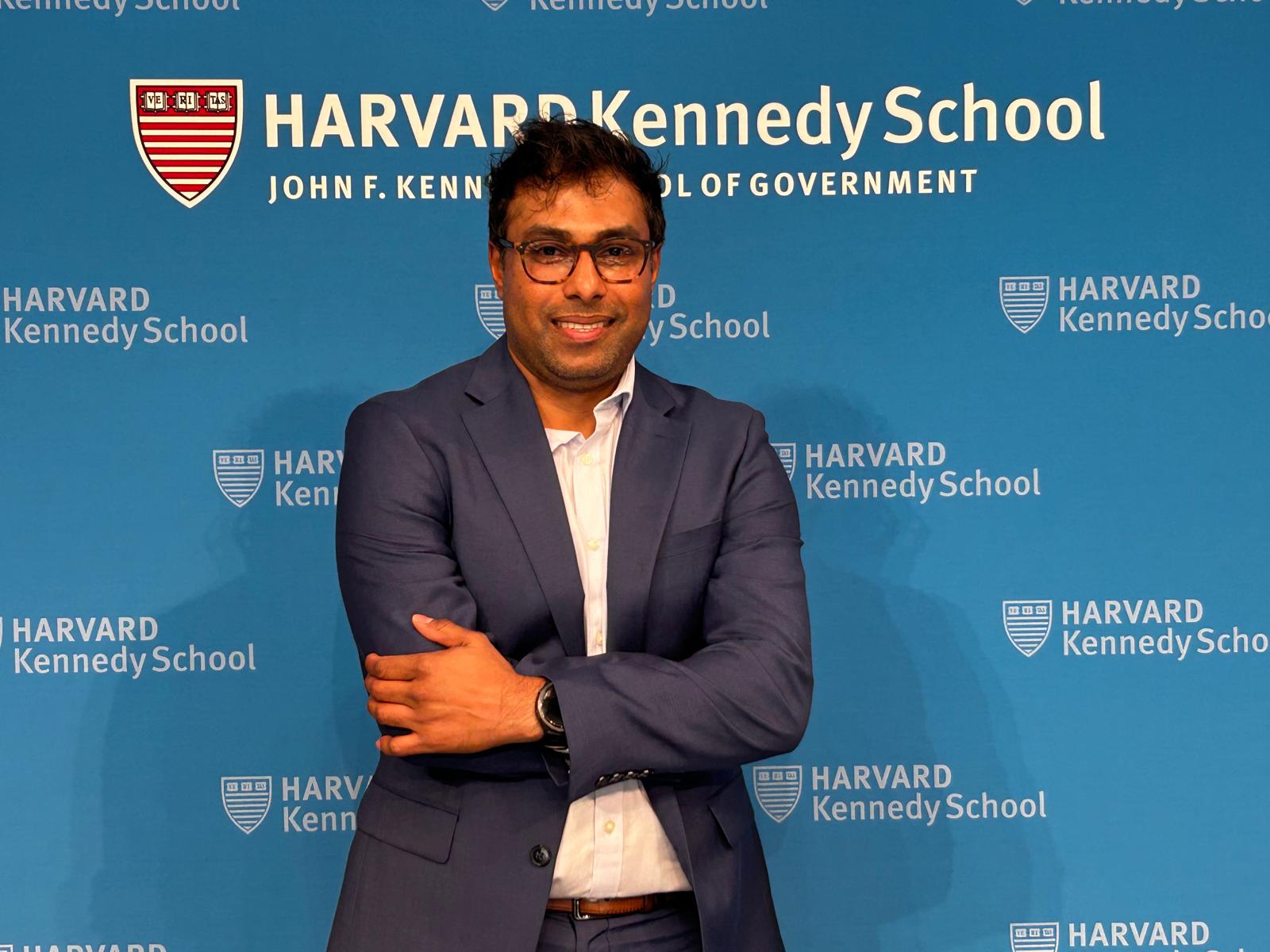
Watch on YouTubeSelected as American Service Fellow and Center for Public Leadership Fellow at Harvard Kennedy School, joining the MC/MPA Class of 2027. Focus areas: AI governance, national security policy, and sovereign technology strategy at the intersection of defense and public leadership.
Harvard Kennedy SchoolThe 2026 Presidential EO on AI and the DAF Data and AI Strategy establish a clear mandate: AI must be operationally integrated, not merely deployed. This article examines how edge-AI architecture — purpose-built for contested, communications-degraded environments — enables human-AI teaming that preserves human judgment while operating at machine speed. Drawing on HAT Lab experimentation at Space Systems Command, the argument centers on three design principles: cognitive load reduction, decision confidence calibration, and resilience under adversarial AI conditions. The nation that decides faster wins. But faster only matters if the decisions are right.
Request the PaperCo-founder of Palladium Ventures (pldm.vc), a defense-focused early-stage venture fund investing in the next generation of national security technology. The fund targets the white space between DoD acquisition timelines and commercial venture cycles — where the most critical dual-use innovation lives. Co-founded with Sakib Rabbani, the fund reflects a belief that the operators closest to the problem are often best positioned to back the solution.
Incoming Mid-Career MPA candidate at Harvard Kennedy School, Class of 2027 — selected as an American Service Fellow and Center for Public Leadership Fellow. The fellowship brings together senior military and civilian government leaders to develop the next generation of public sector leadership. At HKS, the focus will be the governance of AI in national security contexts, sovereign technology strategy, and the policy architecture that makes responsible AI adoption possible at scale. Every relationship built is a node in a long-game platform.
For speaking inquiries, press requests, advisory conversations, and partnership outreach, please use the form. Messages are read personally and replied to when the request warrants a reply.
For matters that should not appear in a web form, direct correspondence is welcome.